
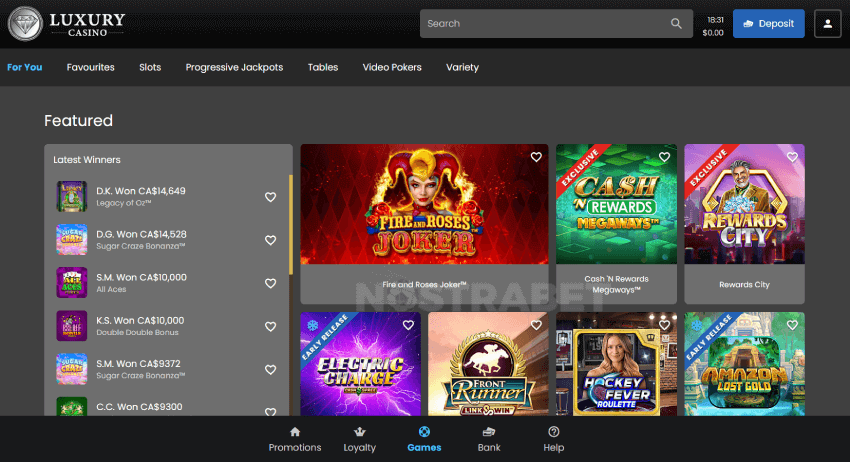
Responsible gambling tools are most useful before a session becomes difficult to control. On lussurio casino online, the published account controls include deposit, wagering and loss limits, along with session reminders, cooling-off periods and self-exclusion. These options do not remove every risk, and their exact operation may depend on the account interface and applicable terms. The practical goal is to choose limits in advance, understand what each one restricts, and avoid treating a gambling account as a source of income.
Choose a limit that matches the behaviour you want to control
Different limits answer different questions. A deposit limit controls how much money can be added to an account during a selected period. A wagering limit focuses on the amount staked, while a loss limit concerns the result after wins and losses are considered. These are not interchangeable. Someone who deposits a large amount and plays slowly may need a deposit limit; someone who deposits modestly but bets rapidly may need a wagering limit.
Begin by looking at your ordinary household budget rather than at a promotional balance or a particularly good gambling session. Money set aside for rent, groceries, debt payments, utilities, savings or tax obligations should never be included in a gambling allowance. A limit should be low enough that reaching it does not create pressure to recover money. If you are unsure what amount is affordable, choosing not to deposit is safer than selecting a number simply because the system accepts it.
It can help to set more than one boundary. For example, a weekly deposit limit can restrict the funds entering the account, while a session or loss limit can provide another layer of control. Keep a written note of the amount, time period and reason for the limit. Do not raise it during an emotional moment, after a loss or because a bonus appears attractive. If the account presents different currencies or periods, read the confirmation carefully so the selected control means what you expect.
Set controls before a session begins
Limits are easier to respect when they are arranged while you feel neutral. Review the account area before choosing a game and look for the sections relating to responsible gambling, limits, account settings or player protection. The available material describes deposit, wagering and loss limits, but the exact screens, activation rules and time periods are not consistently documented. Read the on-screen explanation instead of assuming that every control takes effect immediately.
Record the confirmation of any setting, including the date and the selected amount. If the site displays a pending period, cooling-off delay or confirmation message, keep that information until the change is active. A limit may apply to new deposits but not necessarily to funds already held, or it may govern a particular period rather than each individual game. Those distinctions matter when planning a session and should be checked in the stated account terms.
Use practical barriers alongside account settings. Decide when the session will end, remove saved payment details where possible, and avoid gambling while tired, upset or under the influence of alcohol. A timer or reality check can interrupt automatic play, but it works best when you treat the alert as a stopping point rather than a prompt to continue. If the platform offers several controls, activate the ones that address your personal trigger instead of selecting every option without understanding it.
What reality checks can and cannot do
A reality check is a reminder that interrupts play with information such as elapsed time or activity. Its value is that gambling can make time and spending feel less noticeable, particularly during fast games or extended sessions. The reminder creates an opportunity to pause, review what has happened and decide whether continuing still fits the limit set beforehand.
It is not a guarantee that play will stop. A reminder can be dismissed, and it may not reveal the full financial effect of a session unless you examine the account history. Treat the alert as a required review, not as background noise. When it appears, leave the game, check deposits and losses, and step away for a few minutes. If you feel reluctant to do that, the reluctance itself is useful information about whether continuing is sensible.
Session limits and reality checks also have different purposes. A session limit can establish a maximum period of play, while a reality check provides repeated prompts during that period. Neither tool changes the odds of a game, improves results or makes losses easier to recover. For broader information about gambling-related harm and safer-play support, the Responsible Gambling Council’s public resources offer information relevant to people in Canada.
When a cooling-off period is the better choice
A cooling-off period is designed for a temporary break rather than permanent account closure. It may suit someone who notices that gambling is becoming too frequent, who wants distance after a large loss, or who finds it difficult to follow limits during a particular week. The published controls describe temporary cooling-off options, but the available material does not establish the exact durations or whether a request can be cancelled early.
Before confirming a break, read whether it blocks deposits, wagers, promotional messages and account access, or only prevents selected activity. Check whether pending withdrawals, verification requests or customer-service matters are handled separately. Do not assume a cooling-off period reverses a bonus, cancels a withdrawal or changes existing account terms. If the instructions are unclear, ask support to explain the effect in writing before submitting the request.
Use the time away to identify what led to the decision. Review bank statements, gambling history and any occasions when you exceeded your intended budget. Consider removing gambling applications or bookmarks, telling a trusted person and replacing the usual playing time with another activity. If the break ends and the same concern returns quickly, a longer restriction or self-exclusion may be more appropriate than repeatedly taking short pauses.
Recognise when self-exclusion is necessary
Self-exclusion is a stronger account restriction intended for people who want to stop gambling for a defined period or indefinitely. It should be considered when limits are repeatedly increased, losses are chased, gambling interferes with work or relationships, or attempts to take breaks have not lasted. The available information lists self-exclusion as a control, but it does not confirm its duration, reinstatement process or coverage across other operators.

That limitation is important. An account-level self-exclusion may restrict the named account without blocking access to every gambling website or retail venue. It is therefore not a substitute for wider financial and personal safeguards. Ask support what the restriction covers, how long it lasts, whether it can be extended, and what happens to unsettled transactions. Keep a copy of the request and any confirmation received.
If gambling is causing financial, emotional or relationship problems, do not wait for a perfect explanation before seeking help. Speak with someone you trust, contact a qualified support service, and consider asking your bank about available transaction controls. Never borrow money to gamble or rely on future winnings to cover essential costs. A restriction is a protective decision, not an admission of failure, and it can be taken before a crisis becomes more serious.
Responsible gambling tools: common questions
Can a deposit limit guarantee that I will not lose more?

No. A deposit limit restricts money added to the account, but it does not necessarily measure existing funds, previous losses or activity elsewhere. It also cannot make games profitable. Use it with a realistic budget, session boundaries and a willingness to stop when the limit is reached.
Can a cooling-off period be cancelled early?
Do not assume that it can. The available information identifies cooling-off controls but does not confirm their cancellation rules or durations. Read the confirmation screen and applicable terms carefully. If the wording is unclear, ask customer support before activating the break, because temporary restrictions may be designed to remain in place.
Is self-exclusion the same as deleting an account?
Not necessarily. Self-exclusion is a gambling restriction, while account deletion may involve different handling of personal information, transactions and records. Ask what the selected option blocks, how long it lasts and whether it applies only to one operator. Choose self-exclusion when the priority is preventing gambling access.